Mini Bowling vs Duckpin Bowling Equipment: A Head-to-Head Venue Decision
Short answer: Mini bowling and duckpin bowling are both compact, string-pinsetter formats, but they solve different room shapes. For two lanes, mini has a 13 m standard site planning length and 2.83 m equipment width, with a maximum gantry height of 2.55 m. Duckpin requires at least 10 m of site length, has a 3.48 m equipment width and reaches approximately 2.4 m. Mini balls are listed at 3.3–3.75 lb; the duckpin ball is approximately 1.24 kg. Mini uses ten-pin mini pins at 265 mm and 735 g; duckpin uses ten-pin duckpin pins at 230 mm and 787 g. Duckpin is 3 m shorter but 0.65 m wider and approximately 0.15 m lower at the highest equipment point. The correct choice is the envelope your room can operate, not the format with the more familiar name.

The Compact-Venue Problem: A Two-Lane Package Is Not a Room Fit
Compact bowling projects usually start with a floor plan and a target audience, not with a format. The common mistake is to compare mini and duckpin as if they were interchangeable products. They are two different equipment envelopes with different pin geometry, scoring architecture and site requirements. A room that clears 13 m in one direction may fail on width; a room that clears 10 m may fail on the column grid or the ceiling.
Three constraints usually decide the format: clear length, clear width and clear height. For a two-lane package, mini is longer and narrower; duckpin is shorter and wider. The equipment reaches about 2.4 m for duckpin and 2.55 m at the gantry for mini. On a retrofit, measure the finished clearance below ducts, sprinklers or low beams. The second constraint is electrical: both formats specify 3,000 W per two lanes with a standard 220 V supply. The third is certification scope: both product blocks list USBC-Certified, CE, LVD and MD, but the certificate documents in the corpus have specific scopes that must be matched to the model and destination.
The decision is therefore not a beauty contest between two compact formats. It is a constraint-matching exercise. Once the room envelope is fixed, the player experience and operating profile decide the rest.
Why Compact String-Pinsetter Formats Are Being Specified Now
Compact bowling is being specified into family entertainment centers, bars, restaurants, hotels, resorts, arcades, malls and social clubs. The common requirement is not a full 25.5 m standard lane; it is a two-lane entertainment package that can run in a smaller room and still feel like bowling. The scenario data in the corpus lists both mini and duckpin for indoor, climate-controlled, dry environments with 24/7 operation, matched with a string pinsetter, ball return and scoring system.
The string pinsetter is the technical reason these formats fit. The shared String Pinsetter Machine is listed as a ten-pin, 220 V, 2000 W unit with a pinsetting time of 8.5–10 seconds and dynamic pin-positioning deviation below ±5 mm over the full raising and lowering travel. It is designed for 24/7 continuous operation, with a simplified mechanical structure that reduces moving parts, downtime and long-term maintenance requirements. That architecture supports compact formats because it removes the need for a full free-fall pinsetter room and allows the pinsetter, ball return and scoring to be packaged around a shorter lane.
Certification is the part buyers underestimate. USBC is the United States bowling governing body, and its equipment specifications matter for sanctioned play and for buyer confidence. In the EU, LVD, MD and RoHS documentation is part of the procurement file. The corpus contains specific certificates: USBC 003-25-LP, LVD M.2025.206.C123854, MD M.2025.206.C123751 and RoHS M.2025.206.C123750. The details of those documents are more important than the logo on a product page, and they are covered in the compliance section below.
The Head-to-Head Solution: Match the Envelope, Then the Experience
The decision has a fixed order. First, match the equipment envelope to the room. Second, match the player experience to the audience. Third, match the operating profile to the venue’s service model. Reversing that order produces a layout that looks good in a rendering but fails at installation or at the electrical panel.
1. Footprint and ceiling: the first filter
For two lanes, mini has a standard site planning length of 13 m, an equipment width of 2.83 m and a maximum gantry height of 2.55 m. Duckpin has a minimum site length of 10 m, an equipment width of 3.48 m and a maximum equipment height of approximately 2.4 m. The arithmetic from those envelopes gives approximately 36.8 m² for the mini pair and 34.8 m² for the duckpin pair. That is a difference of about 2 m², or roughly 5%, in favor of duckpin. The more important difference is shape: duckpin saves 3 m of length and adds 0.65 m of width. In a deep, narrow room, mini may be the only fit. In a short, wide room, duckpin may be the only fit.
The standard mini equipment length is 11.82 m, with a 13 m site planning length. Mini equipment length is customizable from 7.62 to 17.82 m in 0.60 m increments. The listed height is equipment height; it is not a complete installation envelope. Ceiling clearance, ductwork, sprinklers, beams and the path used to move the lanes into the room must be checked separately.
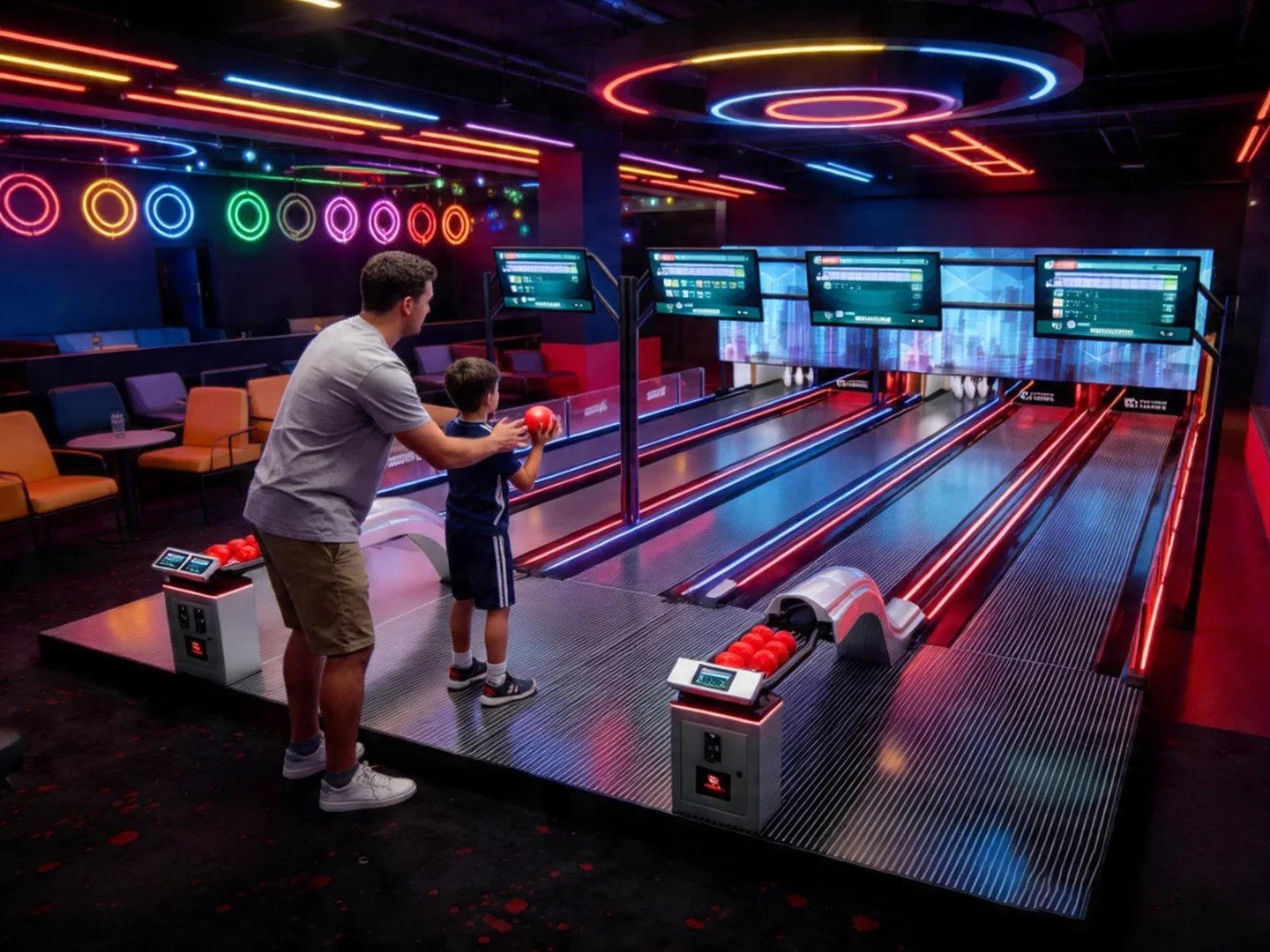
2. Ball and pin: different ball weights and pin geometry
Mini balls are listed at 3.3–3.75 lb. The duckpin ball is approximately 1.24 kg (2.73 lb). The pins are not the same. The Mini Bowling Pin is 265 mm tall and 735 g, made from maple wood and plastic. The Duckpin Bowling Pin is 230 mm tall and 787 g, also made from maple wood and plastic. The duckpin pin is 35 mm shorter and 52 g heavier. That combination changes the visual target and the pin action, but it does not justify a claim that one format scores better. The honest statement is that they produce different pin behaviour and a different visual experience.
Both pin types are listed with USBC-Certified, CE, LVD and MD status in their product blocks. That is useful for procurement, but it is not a substitute for checking the certificate scope. The pin certificate and the lane certificate are not the same document, and the system certificate is not automatically the same as either.
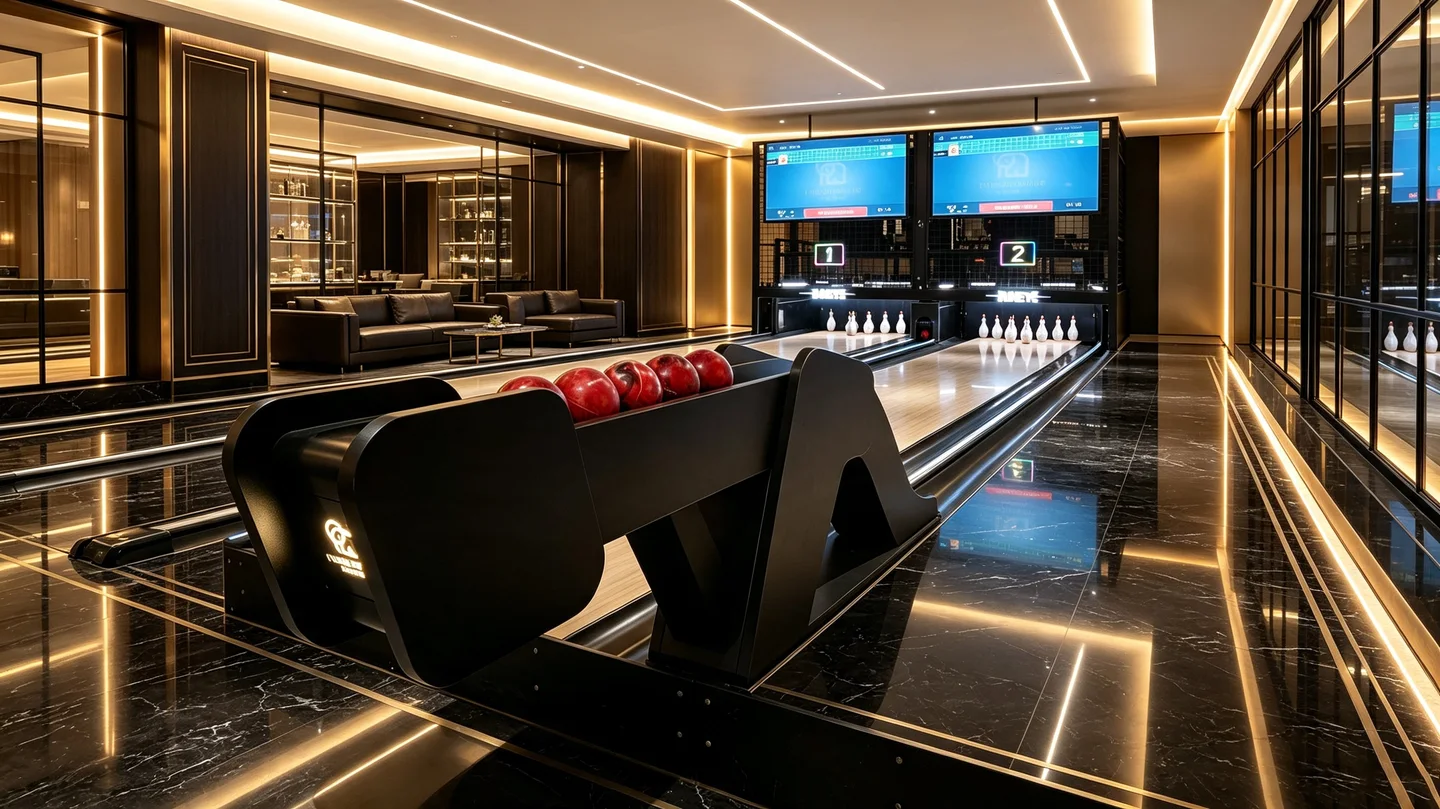
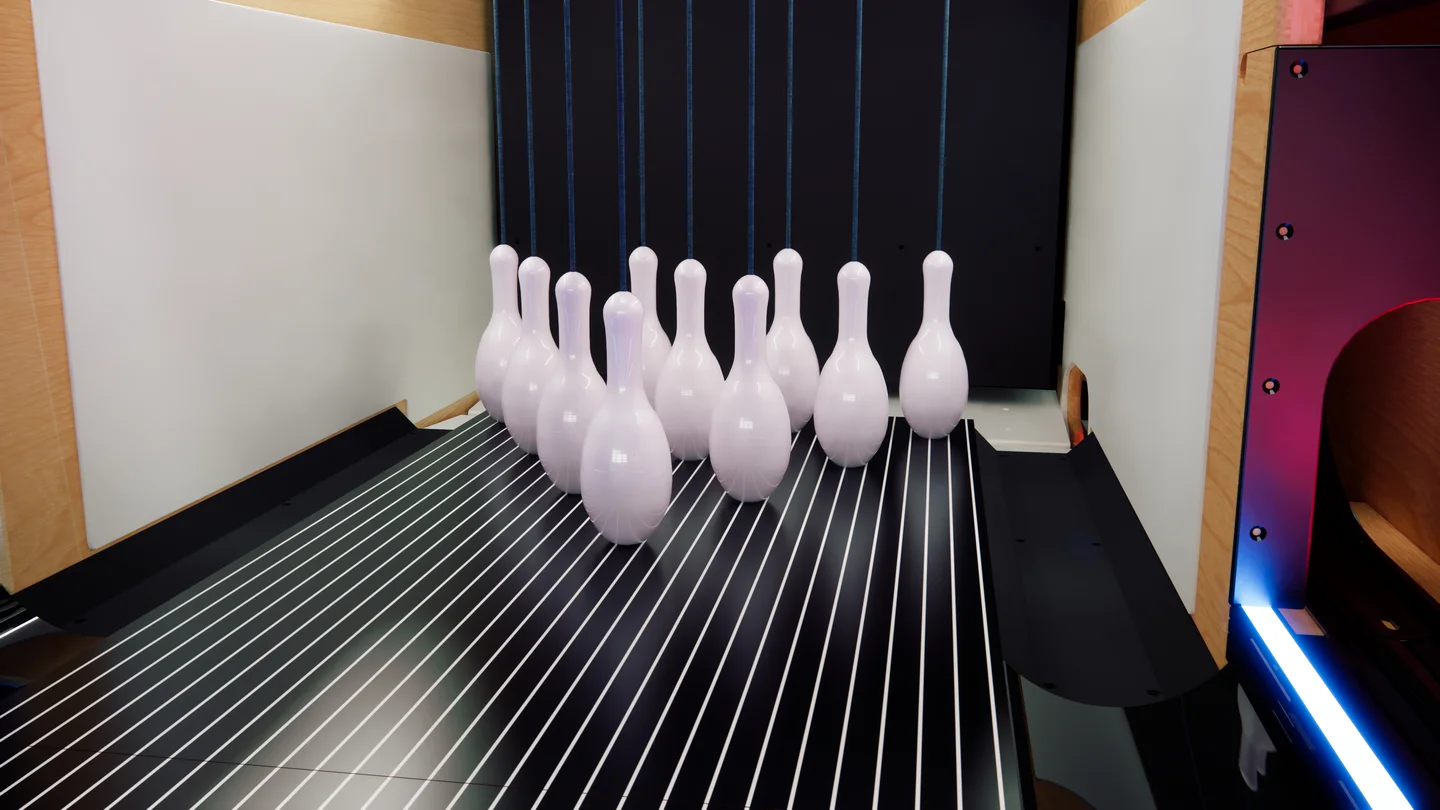
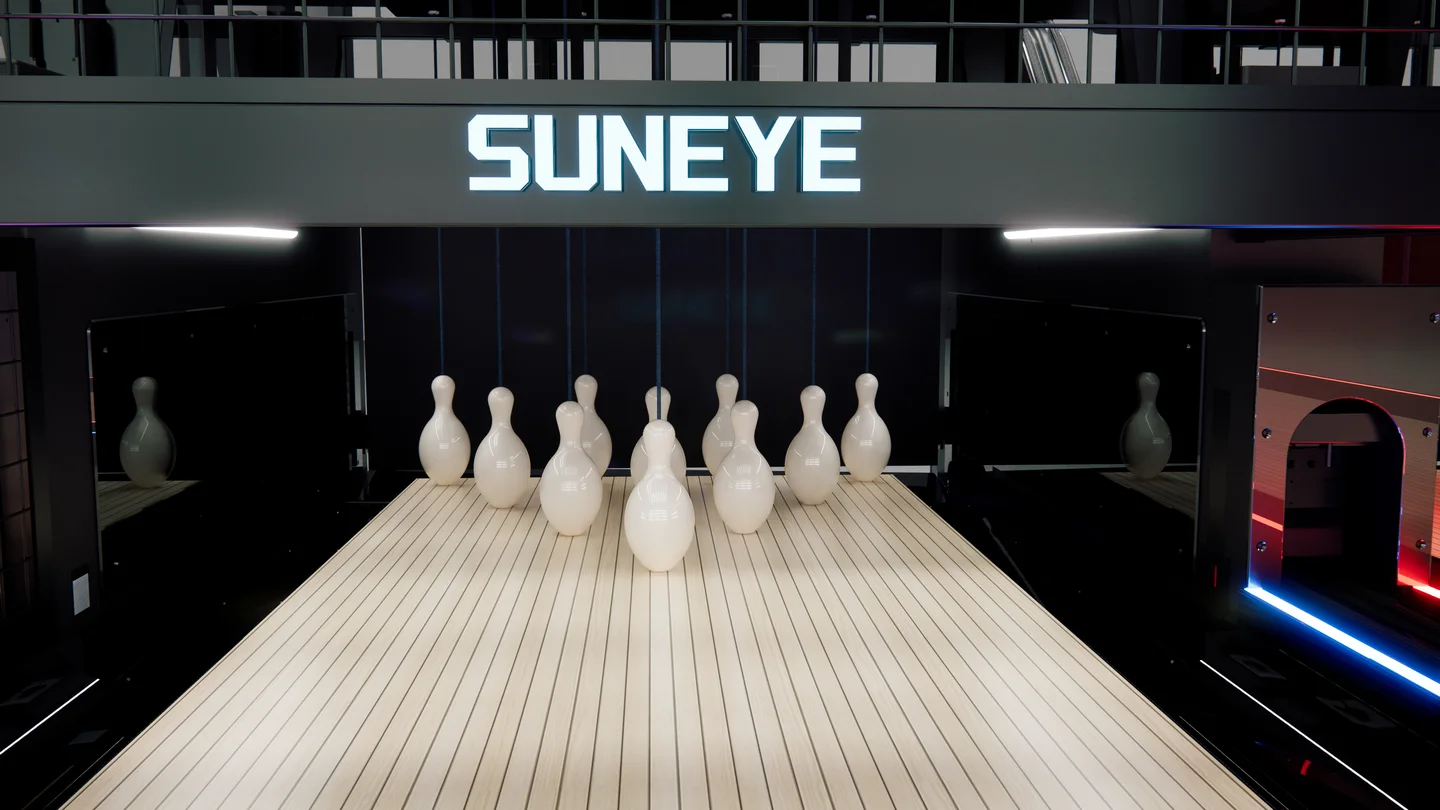
3. Pinsetter, ball return and scoring: the operating rhythm
SunEye lists a pinsetting time of 8.5–10 seconds and dynamic pin-positioning deviation below ±5 mm over the full raising and lowering travel for its string-pinsetting technology. The mini scoring package uses a gantry-mounted HD display with AI vision recognition and infrared sensing, listed at up to 99.98% recognition accuracy with a 0.02% misread rate and lifetime free OTA updates. The duckpin scoring package uses a 65-inch HD display integrated with the pinsetter in a compact equipment zone, with centralized master control for lane operation, scoring and venue operations.
SunEye lists a ball return time of 12 seconds for both formats. For an RFQ, confirm the quoted lane configuration. The jam failure rate is consistently listed at 0.002%, which is the more useful reliability figure for a commercial venue.
4. Lane construction and service life
Both formats use a lane built to withstand 100,000+ ball impacts with a service life of up to 10 years. The mini lane is described as an all-black synthetic lane with multi-layer high-density pressed panels, a scratch-resistant surface coating and sealed edges. The duckpin lane is described as an entertainment system with 8.9 m standard equipment length and a 10 m minimum site length with a durable black metal frame and a natural wood-look lane surface, using the same multi-layer high-density panel construction, scratch-resistant coating and sealed edges. The difference is visual: mini reads darker and more graphic; duckpin reads warmer and more timber-like. Both are commercial surfaces, not residential play surfaces.
5. Power and electrical load
Mini and duckpin each specify 3,000 W for a two-lane configuration and a standard 220 V supply. The shared String Pinsetter Machine is listed at 2000 W and 220 V, and the standalone Ball Return System is also listed at 2000 W and 220 V. Those component figures should not be added together blindly to create a per-lane load. Ask for a per-lane connected-load schedule that covers the pinsetter, ball return, scoring display and lighting. That schedule is what the electrician needs; a product page is not a substitute.
6. Certification and compliance: read the scope, not just the badge
Both product blocks list USBC-Certified, CE, LVD and MD. The corpus also contains the underlying documents. The USBC certificate 003-25-LP was issued by the United States Bowling Congress on 2025-07-30 under the USBC Equipment Specifications and Certification Manual. Its listed scope is the Jinmeijia Lane bowling lane surface. That is a lane-surface certification, not a blanket certification of every component in a mini or duckpin system.
The EU documents are more specific still. LVD certificate M.2025.206.C123854 was issued by UDEM for the EU/EEA market on 2025-08-06 and expires on 2030-08-05. It cites EN IEC 60335-1:2023+A11:2023, EN IEC 61000-3-2:2019+A1:2021+A2:2024, EN 61000-3-3:2013+A1:2019+A2:2021+AC:2022-1, EN IEC 55014-1:2021 and EN IEC 55014-2:2021. MD certificate M.2025.206.C123751 was issued by UDEM on 2025-08-05 and expires on 2030-08-04, citing EN 60204-1:2018/A1:2025 and EN ISO 12100:2010. RoHS attestation M.2025.206.C123750 was issued by UDEM on 2025-08-05 and expires on 2030-08-04. All three EU documents list the scope as Bottle Bowling For Adults.
That scope wording is the key procurement check. A buyer should ask the supplier to confirm in writing that the certificate scope covers the exact model, lane configuration and destination. If the quotation is for Mini Bowling Equipment or Duckpin Bowling Equipment, the certificate file should connect to that model, not only to a related product name. This is not a paperwork detail; it is the difference between a compliance file that survives an audit and one that does not.
Side-by-Side Comparison Table
| Decision factor | Mini Bowling Equipment | Duckpin Bowling Equipment |
|---|---|---|
| Format and pin type | Ten-pin Mini Bowling | Ten-pin Duckpin Bowling |
| Two-lane footprint | 13 m standard site planning length × 2.83 m equipment width; 2.55 m maximum gantry height | 10 m minimum site length × 3.48 m equipment width; approx. 2.4 m maximum equipment height |
| Envelope area (calculated) | Approx. 36.8 m² for two lanes | Approx. 34.8 m² for two lanes |
| Length / width trade-off | 3 m longer, 0.65 m narrower | 3 m shorter, 0.65 m wider |
| Equipment length | 11.82 m standard; 7.62–17.82 m in 0.60 m increments | 8.9 m standard |
| Ball weight | 3.3–3.75 lb | Approx. 1.24 kg (2.73 lb) |
| Pin dimensions | 265 mm, 735 g | 230 mm, 787 g |
| Pin material | Maple wood and plastic | Maple wood and plastic |
| Pinsetter type | String pinsetter | String pinsetter |
| Pin reset | 8.5–10 s | 8.5–10 s |
| Dynamic pin-positioning deviation | Less than ±5 mm over the full raising and lowering travel | Less than ±5 mm over the full raising and lowering travel |
| Ball return time | 12 s | 12 s |
| Jam failure rate | 0.002% | 0.002% |
| Scoring | Gantry-mounted HD display; AI vision + infrared; 99.98% recognition; lifetime free OTA | 65-inch HD display integrated with pinsetter; centralized master control |
| Rated power | 3,000 W for two lanes; standard supply 220 V | 3,000 W for two lanes; standard supply 220 V |
| Product certification block | USBC-Certified, CE, LVD, MD | USBC-Certified, CE, LVD, MD |
| Lane durability | 100,000+ impacts; up to 10 years | 100,000+ impacts; up to 10 years |
| Visual character | All-black synthetic lane; customizable backlit soft-film wall | Black metal frame with natural wood-look lane surface |
| Typical fit | FECs, kids venues, malls, arcades, hotels, restaurants, private clubs | Bars, restaurants, breweries, FECs, hotels, arcades, malls, social clubs |
The envelope areas are calculated from the listed two-lane dimensions and are not separate manufacturer specifications. The 12-second ball return time applies to both formats.
Step-by-Step: How to Decide Between Mini and Duckpin
The sequence below turns the comparison into a procurement decision. It is written for a venue owner, project manager or buyer who is comparing compact bowling formats for a real room.
- Measure the clear envelope, not the room’s marketing area. Record the longest clear run, the widest clear bay and the lowest clear height. Mark columns, beams, ducts, sprinklers, door widths and the path used to bring in the longest lane section. Compare the room with the two-lane planning dimensions: 13 × 2.83 m for mini and 10 × 3.48 m for duckpin. Mini reaches 2.55 m at the gantry, and duckpin equipment is approximately 2.4 m high.
- Choose the shape that fits. If the room is long and narrow, mini’s 13 m length and 2.83 m width may be the better match. If the room is short and wide, duckpin’s 10 m length and 3.48 m width may be the better match. Do not choose a format and then force the room to fit it.
- Confirm the ceiling and the installation zone. Maximum equipment heights are 2.55 m at the mini gantry and approximately 2.4 m for duckpin. Mini normally requires at least 2.8 m finished clear height, with 3.0–3.6 m preferred; duckpin recommends 3.0–3.5 m. On a retrofit, the difference matters. Ask for the installation drawing, not just the product drawing, and check the clearance above the pinsetter and the scoring display.
- Match the player experience to the audience. Mini uses a 265 mm, 735 g ten-pin mini pin. Duckpin uses a 230 mm, 787 g ten-pin duckpin pin. Mini balls are listed at 3.3–3.75 lb and the duckpin ball is approximately 1.24 kg. If the venue is child-focused or family-focused, the mini format’s visual language and customizable backlit wall may be easier to theme. If the venue is bar-led or social-led, the duckpin format’s shorter lane and integrated 65-inch display zone may suit the room and the service flow. These are fit judgments, not performance rankings.
- Select the scoring and control architecture. Mini uses a gantry-mounted HD display with AI vision and infrared sensing, listed at 99.98% recognition accuracy and a 0.02% misread rate, with lifetime free OTA updates. Duckpin uses a 65-inch HD display integrated with the pinsetter and centralized master control. Decide whether the operator wants distributed lane displays or a central control point, and confirm the software support terms in the quotation.
- Build the electrical schedule. Mini and duckpin each list 3,000 W for two lanes on a standard 220 V supply. Ask for a per-lane connected-load schedule covering the pinsetter, ball return, scoring and lighting. Do not size the electrical service from a component label alone.
- Verify certification scope for the destination. Check the USBC, LVD, MD and RoHS documents against the exact model and market. The USBC certificate in the corpus has a lane-surface scope; the UDEM records identify YX-001 equipment. Ask for a written statement that the delivered configuration is covered.
- Issue a configured RFQ. Include lane count, lane length, left/right layout, ceiling height, power availability, scoring preference, branding, installation scope, commissioning, training, warranty and destination. The corpus lists a MOQ of 2 units, a lead time of 30–45 days, annual production capacity of 1,200+ lanes, 100% pre-shipment testing and a 1-year warranty on bowling equipment.
Use Cases: Which Format Fits Which Venue
The scenario data in the corpus gives a practical split. Mini Bowling Equipment is listed for FECs, kids playgrounds, shopping malls, arcades, hotels and resorts, restaurants and private clubs. Duckpin Bowling Equipment is listed for bars, restaurants, breweries, FECs, hotels and resorts, arcades, shopping malls and social clubs. Both are listed for indoor, climate-controlled, dry environments with 24/7 operation and a matched string pinsetter, ball return and scoring system.
Choose mini when the room is long and narrow
A 13 m clear run and a 2.83 m wide two-lane bay can fit a narrow footprint that would be difficult for a wider format. The all-black synthetic lane and customizable backlit soft-film wall give the venue a graphic, modern look. The mini format is a natural fit for family entertainment centers, kids venues, malls and arcades where the bowling offer sits beside other attractions.
Choose duckpin when the room is short and wide
A 10 m clear run and a 3.48 m wide two-lane bay can fit a room that cannot spare 13 m in length. The 65-inch display integrated with the pinsetter creates a compact equipment zone and can act as a visual backdrop. The natural wood-look lane and social-club positioning suit bars, restaurants, breweries and hotel entertainment spaces.
For a commercial bowling center, hotel or mixed entertainment complex, the decision should be made at the layout stage, not at the equipment stage. The same venue can have a different answer for a street-facing bar area than for a family zone. The corpus does not provide mini or duckpin case studies, so this article does not use standard-lane project photos as proof of compact-format performance. It uses the listed equipment facts instead.
FAQ: Compliance, Power, Space and Lead Time
Do SunEye mini and duckpin bowling systems ship with CE compliance documentation for EU projects?
Both product blocks list CE, LVD and MD status, and the corpus contains specific EU documents issued by UDEM for the EU/EEA market. LVD certificate M.2025.206.C123854 was issued on 2025-08-06 and expires on 2030-08-05. MD certificate M.2025.206.C123751 was issued on 2025-08-05 and expires on 2030-08-04. RoHS attestation M.2025.206.C123750 was issued on 2025-08-05 and expires on 2030-08-04. All three list the scope as Bottle Bowling For Adults, so the buyer should ask for written confirmation that the certificate scope covers the exact mini or duckpin model being purchased. The USBC certificate in the corpus, 003-25-LP, has a lane-surface scope covering the Jinmeijia Lane bowling lane surface.
Can mini and duckpin systems run 24/7 in a commercial venue?
Yes, the corpus positions both formats for 24/7 operation in indoor, climate-controlled, dry environments. The string pinsetter is described as designed for 24/7 continuous operation, with a simplified mechanical structure that reduces moving parts, downtime and long-term maintenance. Both lane constructions are listed for 100,000+ ball impacts and a service life of up to 10 years. The practical limit is not the operating-hours claim; it is the maintenance routine, spare-parts plan and local service support.
Which format needs less floor space, mini or duckpin?
Duckpin has the smaller calculated envelope for two lanes: about 34.8 m² versus about 36.8 m² for mini. But duckpin is wider at 3.48 m, while mini is narrower at 2.83 m. Duckpin is 3 m shorter and approximately 0.15 m lower at the highest equipment point; mini has a 3 m longer standard planning length. The better choice depends on the room’s clear length, width and ceiling, not on the area figure alone.
Can lane length, branding and layout be customized before production?
Yes. The capability unit lists OEM, ODM and custom work, including bowling lane length, bowling lane logo, masking unit wallpaper, soft-film lightbox or LED screen wall, guardrails and stairs. Mini Bowling Equipment also lists a customizable backlit soft-film wall. The turnkey scope includes venue planning, CAD layout design, 3D rendering, equipment manufacturing, shipping, installation, staff training and after-sales support. A physical sample policy is not stated in the corpus; ask for it explicitly in the RFQ if a sample is required.
What is the minimum order, lead time and warranty?
The capability unit lists a MOQ of 2 units, a lead time of 30–45 days, annual production capacity of 1,200+ lanes, 100% pre-shipment testing and a 1-year warranty on bowling equipment. Pricing is not published in the corpus, so a configured quotation is required. To move from comparison to a quote, send the floor plan and the preferred format; SunEye states that it provides a free layout proposal based on the floor plan.
Conclusion: Choose the Envelope You Can Actually Operate
There is no universal winner between mini bowling and duckpin bowling equipment. Mini is the longer, narrower package: 13 m standard site planning length, 2.83 m two-lane equipment width and 2.55 m maximum gantry height, with a 265 mm, 735 g ten-pin mini pin and a gantry-mounted AI vision scoring system. Duckpin is the shorter, wider package: 10 m minimum site length, 3.48 m two-lane equipment width and approximately 2.4 m maximum equipment height, with a 230 mm, 787 g ten-pin duckpin pin, a 65-inch integrated display and a standard 220 V supply, with 3,000 W for two lanes. Mini balls are listed at 3.3–3.75 lb; the duckpin ball is approximately 1.24 kg. Both use string pinsetters, and both are listed with USBC-Certified, CE, LVD and MD status.
The decision should be made in this order: clear envelope, ceiling, player experience, electrical load, certification scope, then commercial terms. If the room is long and narrow, mini is the natural candidate. If the room is short and wide, duckpin is the natural candidate. If the certificate scope or the electrical schedule does not match the project, the format should not be frozen yet. That is the difference between a compact bowling installation that opens smoothly and one that stalls at commissioning.
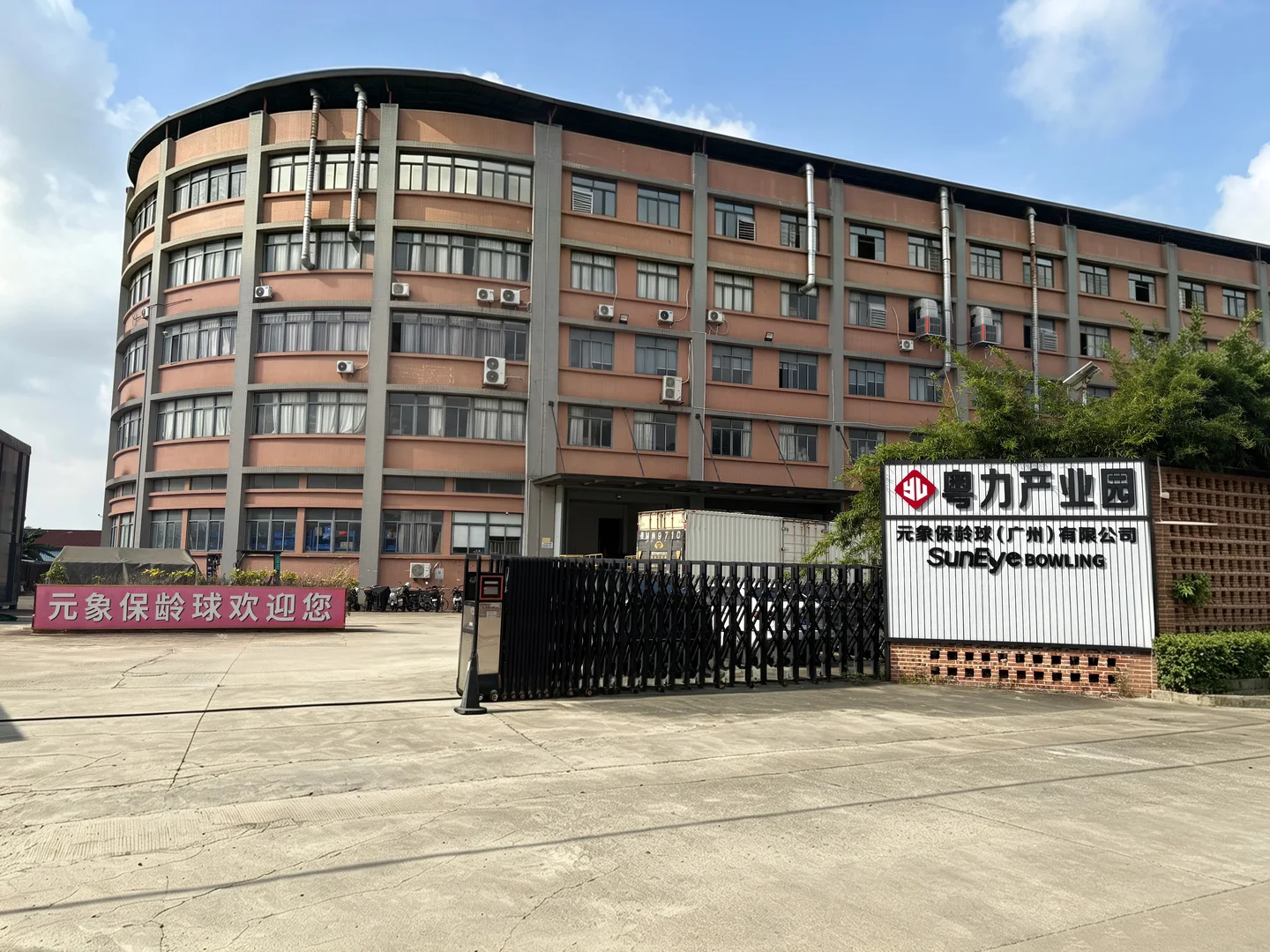
Yuanxiang Bowling (Guangzhou) Co., Ltd. is a Guangzhou-based bowling equipment supplier founded in 2021, with a 10,000 m² independent manufacturing base, nearly 100 professional employees, more than 10 core R&D engineers and 80% export share. The company offers standard, mini and duckpin bowling systems, string pinsetters, lanes, ball return systems and scoring systems, with turnkey planning, CAD layout, 3D rendering, installation guidance and after-sales support.
Next Step: Send a Floor Plan, Not a Guess
If you are comparing mini and duckpin for a compact venue, the fastest way to a reliable answer is a measured layout. Send your floor plan, ceiling height, power availability and target audience. SunEye can prepare a free layout proposal and a configured quotation for the format that fits.
- Email: info@suneyebowling.com
- Tel / WhatsApp: +86 181 2743 1080
- Website: suneyebowling.com
- Factory: Yueli Industrial Park, Panyu District, Guangzhou, China
Ask for the per-lane connected-load schedule, the certificate scope statement and the exact ball-return speed for the quoted configuration. Those three documents prevent most compact-venue surprises.