Ranking Bowling Equipment Setups by Venue Type: Mini, Duckpin and Standard Picks
Three setups cover most bowling venue types, and the order they rank in is set by the building rather than by the brand. Duckpin Bowling Equipment has the smallest standard two-lane equipment footprint, Mini Bowling Equipment sits between duckpin and standard, and Standard Bowling Equipment needs a full commercial footprint but is the only one of the three built around a league-grade ten-pin format.
What follows is a ranking of setups by venue type, not a ranking of manufacturers. Each pick is matched to the venue types it suits, the specifications that decide whether it can physically be installed, and the limitation that makes it the wrong pick somewhere else. SunEye Bowling is a bowling equipment manufacturer based in Guangzhou, China, supplying standard, duckpin and mini bowling systems along with string pinsetters, bowling lanes, ball return systems and scoring systems, so the comparison below works from one consistent equipment dataset instead of mixed catalogues from several suppliers.
Quick answer. Duckpin: 10 m minimum site length, 2.4 m equipment height and 3.0–3.5 m recommended ceiling, smallest floor rectangle. Mini: 13 m standard site length, 2.55 m equipment height and 3.0–3.6 m preferred ceiling, narrowest bay per two lanes. Standard: 25.5 m equipment length, 26 m standard site length and 3.2–3.6 m site height on the drawing, full ten-pin format with 380 mm / 1618 g pins. SunEye lists USBC, CE, LVD and MD certifications, and all three formats run on string pinsetters.

Why the Format Decision Comes Before the Supplier Decision
Most bowling venue projects fail on geometry long before they fail on supplier selection. Three physical constraints decide the shortlist, and none of them can be renegotiated after a purchase order is signed.
Lane run length. The published two-lane planning lengths are 10 m minimum for duckpin, 13 m for the standard mini layout and 26 m for the standard ten-pin layout. A room that cannot surrender roughly 26 m end to end needs a shorter ten-pin configuration; the planning options go down to 18 m. The reverse is equally true: a long hall is not automatically a good site for standard lanes if the ceiling or the bay width fails.
Ceiling height. The three formats have different site-height references: duckpin recommends 3.0–3.5 m, mini prefers 3.0–3.6 m (normally at least 2.8 m), and the standard equipment drawing shows 3.2–3.6 m. Mezzanines, basements and retrofit shells frequently fail this test before they fail the length test, which is why height should be measured on day one rather than confirmed during a site survey.
Ball and pin format. Mini uses balls in the 3.3–3.75 lb range and duckpin uses approximately 1.24 kg (2.73 lb) balls, while standard uses 8–11 lb balls and a 380 mm, 1618 g ten-pin made from maple wood and plastic. The ball is what separates a casual format from a competitive one: lighter balls and shorter runs are playable by children and mixed groups, while 8–11 lb balls with full-size pins are what league and tournament bowlers expect.
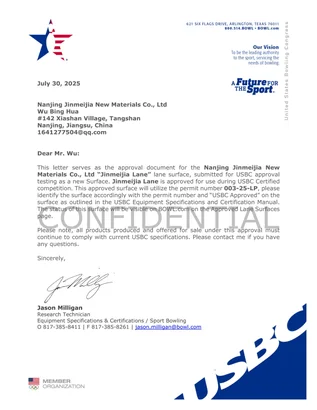
Compliance. Certification is a fourth gate, and it is format-specific and component-specific. SunEye lists USBC, CE, LVD and MD certifications, and the supporting paperwork is granular rather than blanket: USBC certificate 003-25-LP covers the Jinmeijia lane bowling surface, LVD certificate M.2025.206.C123854 and MD certificate M.2025.206.C123751 are issued by UDEM for the listed YX-001 equipment, and RoHS attestation M.2025.206.C123750 covers materials compliance for the listed YX-001 equipment. Buyers in the United States and the European Union should map each document to the component actually being purchased.
The practical consequence is straightforward. Venue type narrows the format, the format narrows the equipment schedule, and only then does supplier comparison become meaningful.
Industry Background: Why Three Formats Compete for the Same Floor Space
Bowling is no longer added only inside purpose-built bowling centers. It is increasingly one attraction inside a mixed leisure venue, and that shift is what makes format ranking necessary rather than academic.
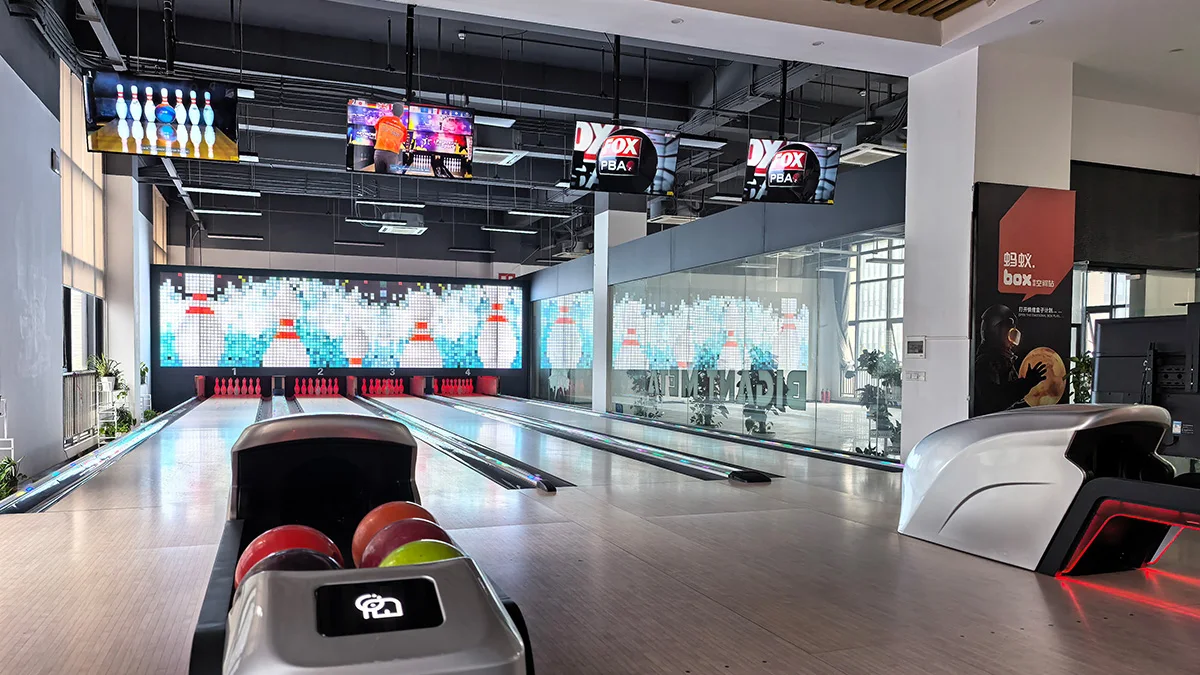
SunEye’s project record reflects the pattern. The company installed a 4-lane standard bowling project at an amusement park site in Tongchuan, China, inside a large aluminium-frame tent alongside high ropes and other attractions. It supplied 6 lanes to Ignite Space inside the Sanming Science and Technology Museum, 12 lanes to an 8,000 m² family entertainment center in Spain, and an 8-lane standard system to Center World in Salerno, Italy. Four venues, four building types, and in each case the format had to fit an existing structure rather than a dedicated bowling hall.
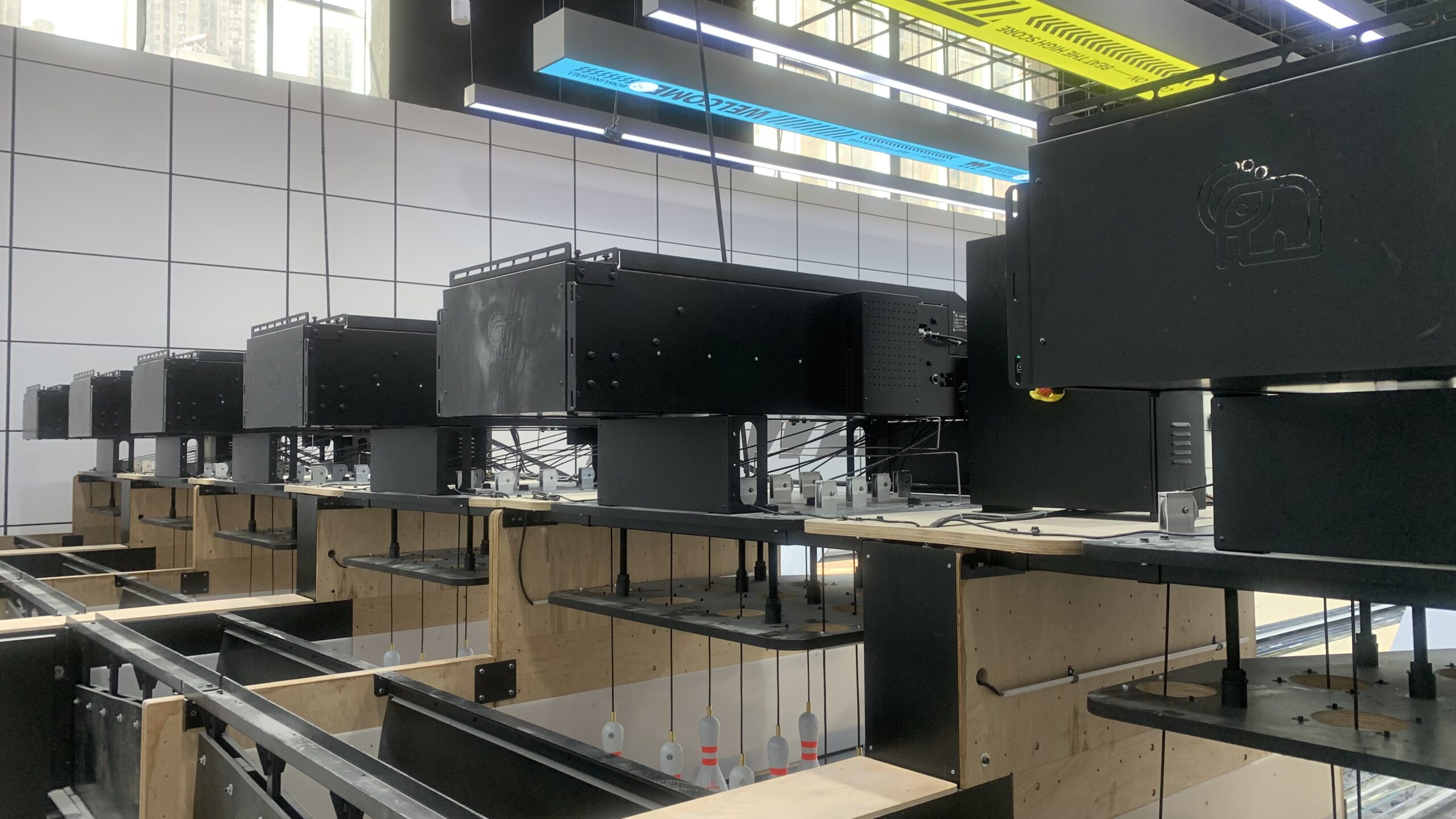
Mechanically, the three formats in this dataset share an architecture. All three run on a string pinsetter, and SunEye states that its automatic string pinsetter is suitable for standard bowling, duckpin bowling and mini bowling applications, with a pinsetting time of 8.5–10 seconds. Consolidation around one pinsetter type matters at the planning stage: maintenance routines, spare parts logic and staff training carry across formats instead of splitting into separate operational silos.
Certification has also moved into format selection rather than sitting at the end of procurement. The United States Bowling Congress publishes equipment specifications for string pinsetters, and its specification work (Chapter 95) covers technical requirements for certified string pin machines, including a minimum string length of 54 inches. For European projects, electrical and machinery compliance is documented separately, which is why SunEye’s LVD and MD certificates referencing EN IEC 60335-1, EN IEC 61000-3-2, EN 61000-3-3, EN IEC 55014-1 and EN IEC 55014-2 on the electrical side, and EN 60204-1 and EN ISO 12100 on the machinery side, sit alongside the USBC paperwork rather than replacing it.
What has not changed is the underlying arithmetic: the smaller the format, the more venue types it can enter, and the larger the format, the shorter the list of buildings that can host it.
The Ranked Picks
The ranking key is fixed and simple: floor area and ceiling height required to install two lanes, because those two numbers eliminate buildings before any commercial consideration applies. Venue fit, certification and customisation are then used to separate setups that survive the geometry test.
RANK 1Duckpin Bowling Equipment — Best for Bars, Restaurants and Social Venues
Duckpin ranks first because it asks the least of the building. The listed two-lane unit measures 8.90 m long, 3.48 m wide and approximately 2.4 m high, which works out to roughly 31.0 m² of floor rectangle — the smallest of the three standard configurations. The minimum site length is 10 m and the recommended finished ceiling height is 3.0–3.5 m.
The system is built around a string pinsetter, ten-pin duckpin pins and balls weighing approximately 1.24 kg (2.73 lb). The standard supply is 220 V and the two-lane equipment power is 3,000 W, so the electrical brief has to confirm the final configuration rather than assume a single connection covers the bank. SunEye lists USBC, CE, LVD and MD certifications, and equipment ships in wooden box packing.
Venue fit is where duckpin earns its first place. A 10 m run can be carved out of a restaurant, a bar, a brewery or a compact family entertainment center without demolishing the existing floor plan, and the light ball keeps the format accessible to casual groups who have never bowled before. SunEye positions duckpin for bars, restaurants, FECs and social entertainment venues, and the published dimensions support that positioning rather than contradict it.
The limitation: duckpin is not a ten-pin league format. A venue whose revenue plan depends on competitive leagues, sanctioned averages or tournament play should read Rank 3 first and treat duckpin as an additional attraction rather than a substitute.
RANK 2Mini Bowling Equipment — Best for FECs, Children’s Centers and Compact Family Venues
Mini ranks second because it is longer than duckpin but narrower. The listed two-lane unit is 11.82 m long, 2.83 m wide and 2.55 m high, with a standard site length of 13 m. Extended layouts use 13.6–19 m of site length. Equipment length can be customised between 7.62 m and 17.82 m.
That width difference is why mini deserves its own slot instead of being treated as a variant of duckpin. At 2.83 m for two lanes, mini needs 0.65 m less bay width than duckpin’s 3.48 m, which matters in narrow retail units, converted corridors and mezzanine floors where every centimetre of width is contested. The trade-off is length and height: 13 m standard site length instead of 10 m minimum, and a preferred ceiling of 3.0–3.6 m instead of 3.0–3.5 m recommended for duckpin.
Mini has its own ball and pin specifications — 3.3–3.75 lb balls and ten-pin mini pins, run through a string pinsetter. SunEye lists USBC, CE, LVD and MD certifications. The 13.6–19 m site length for extended layouts is the underrated feature here. It lets a planner stretch the run to use the full depth of a room instead of accepting a fixed dimension and leaving dead space at the end of the bay.
The limitation: like duckpin, mini is not a full ten-pin format. It is designed for children’s centers, family entertainment venues and compact spaces, and it will not meet a league bowler’s expectations of ball weight or pin behaviour.
RANK 3Standard Bowling Equipment — Best for Bowling Centers and League Play
Standard ranks third on space and first on format authority. The listed two-lane unit measures 25.5 m long and 3.469 m wide, with equipment length customisable between 17.5 m and 25.5 m and site length between 18 m and 26 m. That is roughly 88.5 m² of floor rectangle for two lanes — more than twice the footprint of either compact format — with a site-height reference of 3.2–3.6 m on the drawing.
In exchange, standard is the only setup here built around full ten-pin equipment: 8–11 lb balls and pins of 380 mm and 1618 g, made from maple wood and plastic. SunEye lists USBC certification. The string pinsetter, ball return system and scoring system come from the same equipment families used in the compact formats, scaled to a longer run — ball return track length, for example, is specified at 18–26 m and customised per project.
Standard also carries the largest project references in this dataset. SunEye delivered an 8-lane standard system to Center World in Salerno, Italy, and a 12-lane standard installation to an 8,000 m² family entertainment center in Spain that also runs trampolines and party facilities. A venue that wants bowling as an anchor attraction rather than a side offering is buying this format.
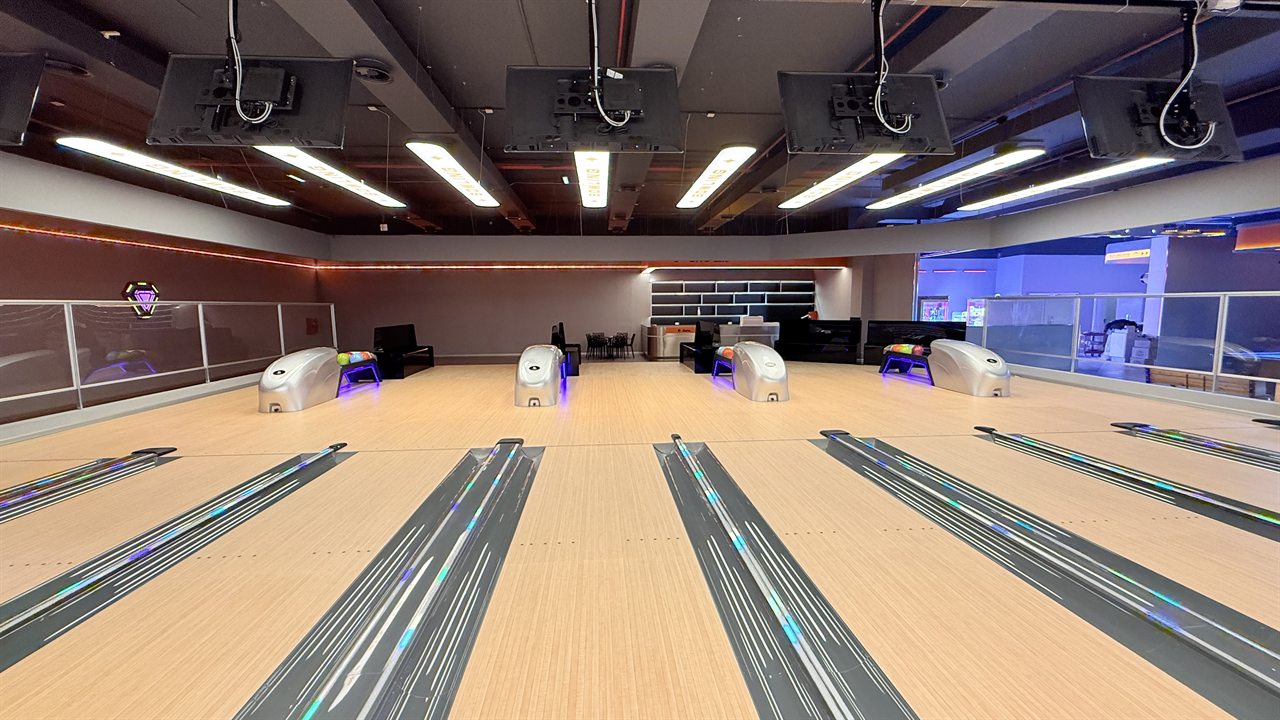
The limitation: standard is the least forgiving of the three. It needs the longest run, a site height shown as 3.2–3.6 m and the most civil work, and it is the format most likely to be ruled out by a building before a single supplier is contacted.
How the Ranking Changes With Your Anchor Constraint
The order above is a planning default, not a quality judgement. Re-rank the list once the fixed constraint is known.
If sanctioned league play is the anchor: Standard Bowling Equipment moves to first place and the compact formats become secondary attractions.
If the room already operates as a bar or restaurant: duckpin stays first, because a 10 m minimum site length and a recommended 3.0–3.5 m ceiling are the dimensions most likely to clear an existing fit-out.
If the bay is narrow but deep: mini overtakes duckpin, at 2.83 m of width per two lanes with site length adjustable from 13.6 m to 19 m for extended layouts to use the available depth.
If the venue is a family entertainment center: lane count matters as much as format. SunEye’s Spanish reference uses 12 standard lanes inside an 8,000 m² FEC that also operates trampolines and party facilities, so the bowling bank had to carry both casual family traffic and group bookings.
Step-by-Step Breakdown: From Floor Plan to Commissioning
Step 1 — Measure three numbers before shortlisting anything
Record the longest unobstructed run, the finished ceiling height and the usable bay width, then compare them against the ranked specification: 10 m minimum site length / 3.0–3.5 m recommended clear height / 3.48 m equipment width for duckpin, 13 m standard / 3.0–3.6 m preferred / 2.83 m for mini and 26 m standard / 3.2–3.6 m on the drawing / 3.469 m for standard, all quoted for two lanes. A site that fails on ceiling height is out regardless of how much length it offers.
Step 2 — Fix the guest profile and lane count
Decide whether the venue is selling casual social play, family play or league play, then set a lane count that matches peak demand rather than available floor area. Two lanes is SunEye’s stated minimum order quantity, which makes a two-lane pilot or a single compact bank a viable first phase for a venue testing the format.
Step 3 — Confirm the compliance path
For US projects, verify which USBC document covers which component; certificate 003-25-LP, for example, is issued for the Jinmeijia lane bowling surface under the USBC Equipment Specifications and Certification Manual. For EU projects, request LVD, MD and RoHS documentation alongside the equipment schedule, and check that the model numbers on the certificates match the models being quoted.
Step 4 — Freeze the layout and the customisation scope
Send a floor plan or CAD drawing and have the layout drawn before manufacturing starts. SunEye’s turnkey scope covers venue planning, CAD layout design and 3D rendering ahead of production. Customisation extends to lane length, lane logo, masking unit treatment (wallpaper, soft-film lightbox or LED screen wall), guardrails and stairs — which is where a standard system is adapted to a building that was never designed for bowling.
Step 5 — Plan production, installation and support
Production lead time is 30–45 days, backed by an annual production capacity of 1,200+ lanes from a 10,000 m² production base staffed by nearly 100 professionals. Quality control is a 100% pre-shipment test under the ISO 9001:2015 quality-management framework. Delivery scope includes installation, commissioning and staff training, with a 1-year warranty on bowling equipment, remote technical support and long-term software upgrade service afterwards.
Step 6 — Specify the operating systems
Confirm the string pinsetter (2000 W, 220 V, 8.5–10-second pinsetting time, ten pins), the ball return system (2000 W, 220 V, 12-second ball return time, 18–26 m return track customised per project) and the scoring system (4.3-inch display, 1280 × 720 resolution, tournament and PK game modes including local or remote cross-store online play). These three systems shape staffing and maintenance routines far more than lane finish does.
Use Cases: Four Installations Matched to Venue Type
Family entertainment center — Spain, 12 lanes. An 8,000 m² FEC combining trampolines, attractions and party facilities used standard bowling as an anchor for families and birthday groups. Standard ranks third on space, but a venue of this size has the footprint to support it, and full ten-pin equipment keeps adult and league bookings open.

Bowling center — Italy, 8 lanes. Center World in Salerno took an 8-lane standard system as the core attraction of a new entertainment and leisure destination. This is the classic Rank 3 case: an operator building a bowling business rather than adding bowling to an existing one.
Amusement park inside a tent structure — China, 4 lanes. The Tongchuan project placed four standard lanes inside a large aluminium-frame tent alongside high ropes and other recreational attractions. It shows where geometry beats convention: standard lanes were feasible because the structure provided the run and the height, not because the building was purpose-designed for bowling.
Science and technology museum — China, 6 lanes. Ignite Space, inside the Sanming Science and Technology Museum, combines trendy sports, family entertainment and dining, and uses a 6-lane standard installation as one interactive element among several. Lane count matters here: six lanes serves group traffic without consuming the floor area a full center would require.
Comparison Table: Three Setups at a Glance
| Rank and setup | Two-lane footprint | Ball weight and pin type | Best-fit venue types | Key limitation |
|---|---|---|---|---|
| 1 — Duckpin Bowling Equipment | L8.90 m × W3.48 m × H2.4 m equipment (approx. 31.0 m²); minimum site length 10 m | Approx. 1.24 kg (2.73 lb) balls; ten-pin duckpin pins | Bars, restaurants, FECs, social entertainment venues | Not a ten-pin league format |
| 2 — Mini Bowling Equipment | L11.82 m × W2.83 m × H2.55 m equipment (approx. 33.5 m²); standard site length 13 m, extended site lengths 13.6–19 m | 3.3–3.75 lb balls; ten-pin mini pins | Children’s centers, FECs, compact family venues | Prefers a 3.0–3.6 m ceiling, normally at least 2.8 m; still not a league format |
| 3 — Standard Bowling Equipment | L25.5 m × W3.469 m (approx. 88.5 m²); equipment length customisable 17.5–25.5 m, site length 18–26 m, site-height reference 3.2–3.6 m | 8–11 lb balls; 380 mm / 1618 g ten-pin | Bowling centers, league play, FECs, hotels and resorts | Longest run; site-height reference 3.2–3.6 m |
Supporting Systems Shared Across the Three Setups
| Component | Published specification | Why it matters at planning stage |
|---|---|---|
| String Pinsetter Machine | 2000 W, 220 V, pinsetting time 8.5–10 seconds, ten pins | Sets the maintenance routine and staffing skill for all three formats |
| Bowling Ball Return System | 2000 W, 220 V, ball return time 12 seconds, 18–26 m return track (customised) | Track length tracks the lane length decision, especially on standard runs |
| Scoring System and HD Score Display | 4.3-inch display, 1280 × 720 resolution, tournament and PK modes with local or remote cross-store online play | Determines programme design, challenge events and league-style booking formats |
| Standard Bowling Pin | 380 mm height, 1618 g, maple wood and plastic; SunEye lists USBC certification | Defines the full ten-pin format; not used in duckpin or mini setups |
FAQ
Are duckpin, mini and standard bowling equipment USBC-certified?
SunEye Bowling lists USBC, CE, LVD and MD certifications. Certification is component-specific rather than blanket: the Jinmeijia lane bowling surface holds USBC certificate 003-25-LP, issued on 30 July 2025 under the USBC Equipment Specifications and Certification Manual, while the electrical and machinery documentation includes LVD certificate M.2025.206.C123854 and MD certificate M.2025.206.C123751 from UDEM for the listed YX-001 equipment. Buyers should confirm which document covers which component before ordering.
What is the minimum space needed for each bowling format?
Space requirements differ by format. The standard planning length is 26 m for ten-pin bowling and 13 m for mini, while duckpin uses a minimum site length of 10 m. The published two-lane equipment dimensions are L8.90 m × W3.48 m × H2.4 m for duckpin, L11.82 m × W2.83 m × H2.55 m for mini, and L25.5 m × W3.469 m for standard. The standard drawing shows 3.2–3.6 m site height. Sending a floor plan is the fastest way to confirm which formats actually fit, because SunEye provides a layout proposal against the drawing.
What is the minimum order quantity and production capacity behind an order?
The minimum order quantity is 2 units, which allows a two-lane pilot instead of a full lane bank. Annual production capacity is 1,200+ lanes from a 10,000 m² facility, so a multi-lane project and a single-format trial draw on the same production line. Customisation is available on an OEM, ODM or project-specific basis, covering lane length, lane logo, masking unit treatment, guardrails and stairs.
How is the equipment validated before it ships?
Every unit goes through a 100% pre-shipment test under the ISO 9001:2015 quality-management framework, covering assembly, testing, debugging and final inspection. Projects are shipped in wooden box packing, and the turnkey scope includes installation, commissioning and staff training, so validation continues on site rather than stopping at the factory gate.
What is the lead time, and what support continues after installation?
Production lead time is 30–45 days from a confirmed configuration. After installation, bowling equipment carries a 1-year warranty, with remote technical support and a long-term software upgrade service for the scoring system. To start a comparison, send a floor plan to info@suneyebowling.com and SunEye will return venue planning, CAD layout design and a 3D proposal against the drawing.
Conclusion: Rank the Room, Then Rank the Equipment
Duckpin, mini and standard are not competing answers to the same question. They are three different questions asked by three different buildings. Duckpin wins wherever a 10 m minimum site length and the recommended 3.0–3.5 m ceiling are all the room can offer, mini wins in narrow bays where 2.83 m per two lanes and an adjustable 13.6–19 m site length for an extended layout fit better, and standard wins whenever league-grade ten-pin play is the point of the project.
The ranking is a starting point, not a verdict. Measure the run, the ceiling and the bay, check which certifications the target market actually requires, and only then compare equipment schedules. SunEye Bowling, founded in 2021, manufactures all three formats from a 10,000 m² production base in Guangzhou with more than 10 core R&D engineers and an annual production capacity of 1,200+ lanes, which means the format decision can be made on venue fit rather than on whatever a supplier happens to keep in stock.
Next step: send a floor plan, get a layout. SunEye Bowling returns venue planning, CAD layout design and 3D proposals against a site drawing, and can quote duckpin, mini and standard configurations for the same room so the comparison is like for like.
Email: info@suneyebowling.com · WhatsApp: +86 181 2743 1080 · Website: suneyebowling.com
Factory: Yueli Industrial Park, Panyu District, Guangzhou, China.